I looked at Snake pages for a long time...
This was one of my Favorites! SRN
How to Identify a Snake Species
Read the below, but your best bet may be to simply type your
location and a description of the snake into a search engine, and look
at the image results.
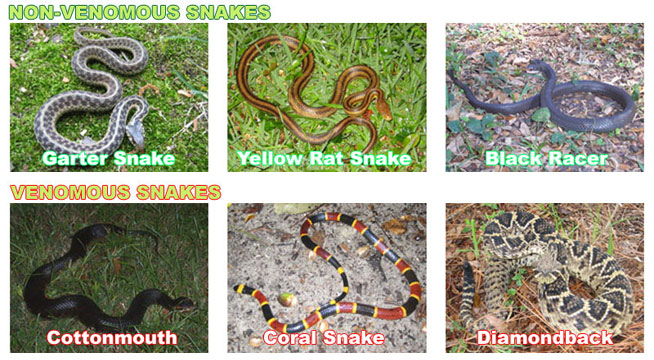
Identifying snakes has little to do with the myths surrounding poisonous
and non-poisonous characteristics and has more to do with body type
classification. There are very few tricks that can be used when
determining the venom factor, the only one of which is pupil shape. All
snakes with slit-shaped pupils are poisonous. Not all poisonous snakes
have slit-shaped pupils. This one certainty is often difficult to
ascertain as it requires you to get extremely close to the snake to make
your determination.
In reality, snake experts use a methodical system to categorize
and identify a snake once it has been found. These basic guidelines are
then cross-examined against a reference book. Many seasoned experts can
tell a snake by visual alone, but for the rest of the population, the
step-by-step identification process is handy.
The first characteristic accessed is body length. Snakes are
categorized into three classes: small, medium, and large. Once length is
determined, the width of the snake is also examined. If possible,
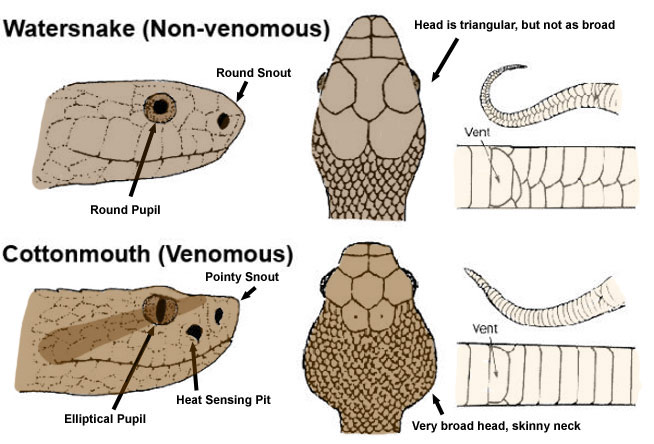
actual dimensions should be gathered. A snake’s head shape can tell a
lot about it, but does not necessarily mean anything in regards to
venomous or non-venomous. Many pit vipers have triangular heads, but
other snakes can resemble the same shape when they deliberately flatten
their heads in aggression or anxiety. Knowing if the snake has a round,
long, or oval head will help in identification but is not any proof of
venom or lack thereof. Eye color, pupil shape, location on the face, and
eye size should all be noted. These three identifiers: body length and
width, head shape, and eye characteristics will narrow down the
possibilities for species identification.
Color is usually very helpful in determining the type of snake
you have located. Many snakes have distinctive patterns. Noting the
patterns and the colors is very important. Sometimes the difference
between a harmless snake and a deadly viper is one ring of coloration.
Blotches usually refer to patterns with no symmetry. Theses markings are
often rectangular with darker edges. If a diamond pattern is noted,
color and color pattern should be noted as well. Are there speckles
(flecks of color) or spots (large or small defined, solid color
circles)? Ring patterns appear like bands around the width of the snake.
Stripes are patterns lengthwise down the body. Note color contrasts.
Some snakes are one color on the dorsal side and a different color on
the belly. Distinctive markings on the head and neck may be present.
Lastly, some snakes have no markings at all and are one, solid color.
Tail characteristics are another guide to identifying a snake.
The tail is defined as the length of body stretching beyond the snake’s
anus. Tails can end with a rattle. They can be pointed or rounded. Some
have specific patterns. When the snake is turned over, is the scale near
the anus single or divided?
Experts are able to use the number and arrangement of scales on a snake to further assist in the identification process.
Once all the information is gathered, a field guide will help
you narrow down your list. The characteristics noted will pinpoint one
or maybe a few species suspected. Some snakes are almost identical, and
it is these snakes that need the assistance of habitat evaluation. If a
snake cannot be identified by appearance alone, the habits of the
species will come into play. Some snakes like rocky soil. Some snakes
like sand. Some snakes eat only certain animals, or will only be found
out at certain times of day. Not all snakes are found everywhere. Having
a good, basic knowledge of the local area will help tremendously.
The important thing to remember is that most “quick”
identification advice is based loosely on truth. You cannot always be
certain of a snake’s venom potential just by the shape of its head, the
color of its body, the habitat it lives in, or the color and shape of
its eyes.
You may want to read my
Shed Snake Skin Identification page if you've simply found the sheddings, and want to tell what type of snake left them behind.
Snake Enemies - Animals Catch Snakes
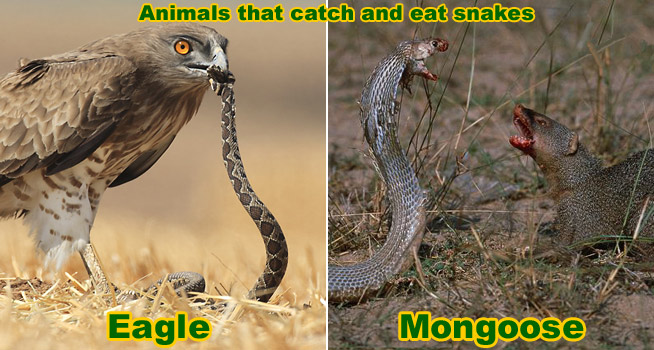
Yes, many animal species in the wild catch and kill snakes.
Some of these species can even be trained in the art of snake
extermination! Animal types
that hunt and kill snakes include many species of raptors -
eagles and hawks, honey badgers, and of course the notorious mongoose.
King Snakes eat
only other snakes. And believe it or not, common house cats and
dogs catch and kill snakes too. Some species of dogs can be trained to
catch and kill
snakes.
What animals keep snakes away -
First of all, no common house pet will keep snakes away without special
training, and even then, you put the animal at great risk. Cats and dogs
may do a decent
amount of snake hunting, but they will not actively patrol your property
just for snakes. You will have to take into account, too, the fact that
any house pet exposed to snakes will also be prone to bite injuries. If
you live in an area with venomous snakes, this can be disastrous. Pigs
have been known to kill snakes,
but again, these animals are not hunting the snakes, rather they are
reacting instinctively and stomping the serpents when the opportunity
presents itself. The
mongoose is a pet that does have special attributes specifically for
snake hunting and killing. These weasel-like animals eat snakes, and
have special genetic
attributes that make them immune to venom. The mongoose is very agile
and has a thick coat, making it a perfect combatant for snake wars. The
downside to the
mongoose is that it’s importation to countries where it is not native is
strictly regulated. The diet of the mongoose makes it a habitat
destroyer when it is
introduced into new environments. The urine of a mongoose can be used
to repel snakes with some efficacy, but this is also not available to
the public.
Why do snakes get scared of mongoose - It’s not necessarily that snakes
become frightened when they smell a mongoose as much as they become
wary. The mongoose is a
fantastic little animal, resembling a stocky weasel and acting with
prairie dog-like communication skills. It is naturally immune to snake
venom and hunts serpents
as a main food source. Mongoose urine has been used to repel snakes with
moderate results, though the product is not available to the American
public. Many countries
in Europe and Asia keep mongoose as pets for the purpose of warding
against snakes. Due to the little animal’s tendency to eat other
creatures, its importation into
other countries has been regulated. Some areas have experienced
significant ecosystem damage from non-native mongoose population. Even a
mongoose will not keep all
snakes away all the time. Just like with an predator, the snake will
acknowledge the mongoose scent, but unless it sees on, it may just
proceed forward with caution.
What dog keeps snakes away - There are no dogs that are born with an
insatiable desire to hunt and kill snakes, largely because snakes are
not a part of the canine
diet. There are certain breeds with stronger hunting instincts than
other, like the Rat Terrier or the Airedale. These dogs will be more
inclined to chase and kill
a small, moving animal, but they will not patrol your property
specifically looking for snakes. Keep in mind that any dog will be
subject to the bite wounds that
come from tangling with snakes around the yard. Animals are just as
prone to infection as humans, and a dog with multiple puncture wounds
will need frequent veterinary
visits. The cost of this constant care will quickly outweigh any benefit
the canine has as a rattlesnake hunter. Some dogs will even avoid
snakes after being bitten. If you
bought the dog strictly for snake hunting, that’s a touch pill to
swallow. Now, you will have a dog and you will have snakes still in the
yard. The only pet that is
really effective against snakes is the mongoose; however, their
importation into North America has been prohibited due to the little
critter’s habit of taking over
ecosystems.
Snake fear pig - Snakes do not naturally fear pigs, though pigs and many
hooved animals fear snakes. This is what leads to the volatile
responses from animals like
the pig when a snake is seen in the pen. Pigs don’t like snakes because
both animals are close to the ground. The last thing the pig wants is
the snake to injure one
of its young. For this reason, pigs are instilled with a deep desire to
run down any snakes and stomp them to death. It has nothing to do with
snakes and pigs having
a vendetta. Snakes are simply known predators of baby animals, and the
pig is aware of this. The snake will not be fearful of the pig as long
as the larger creature
keeps its distance. This is how most animals are, and this is why many
predator decoys and urine repellents fail to do any good. Animals, even
natural enemies, will
tolerate one anothers presence if no immediate threat is felt. A snake
can pass through a pig’s territory, but if the serpent gets too close to
something important,
the pig will let it know. Keeping pigs on your property will not keep
snakes away. Pigs are not snake hunters, and they will not spend much
time or energy looking for
a fight.
Who is the enemy of snakes? Although a ton of animals prey on snakes,
from owls, coyotes, bobcats, foxes, raccoons, weasels, snapping turtles,
alligators, even crows, it is not easy to come by trainable
pet animals that eat snakes, if you're looking for a type of animal that
kills rattlesnakes or any venomous snakes, to help you with a snake
removal project.
It's not a common or practical thing done, and I know of no special
trainer, service, or company that offers animals to control snakes, or
training for dogs or cats to catch and
remove snakes. I did once see a Secretay Bird in a zoo that was great at
catching snakes and well trained, but I doubt you're going to go to
your local pet store and pick up
a Secretary Bird, Snake Eagle (Circaetus), or even serpent hedgehog.
Your best bet for snake control is either of the below options.
Option 1 - HIRE A PROFESSIONAL
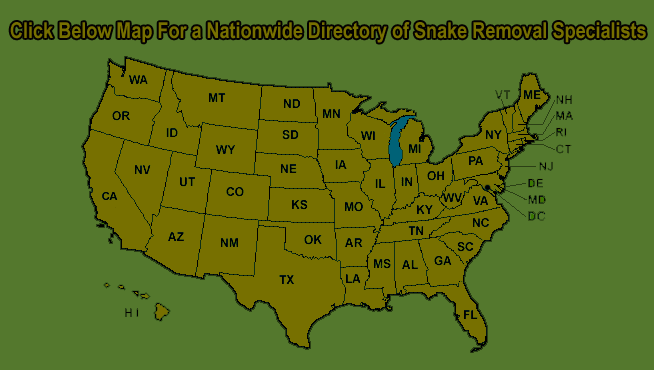
Click your state on this map in order to hire a professional in your
area. This website lists snake removal experts in 472 different US
cities and towns.
Option 2 - BUY A SNAKE TRAP
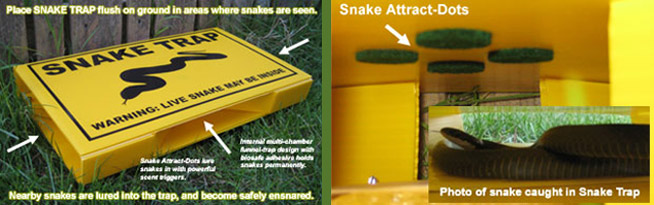
I have reviewed and field tested several snake trap designs, and
the one featured on this website is the most durable and effective.
It is the highest quality snake trap available on the market. You
can purchase it securely right here from this website:
Click Here To Buy Professional Grade Snake Trap.
For more information, go to my
Snake Removal - How to Get Rid of Snakes home page.
Coral Snake (courtesy Flickr)